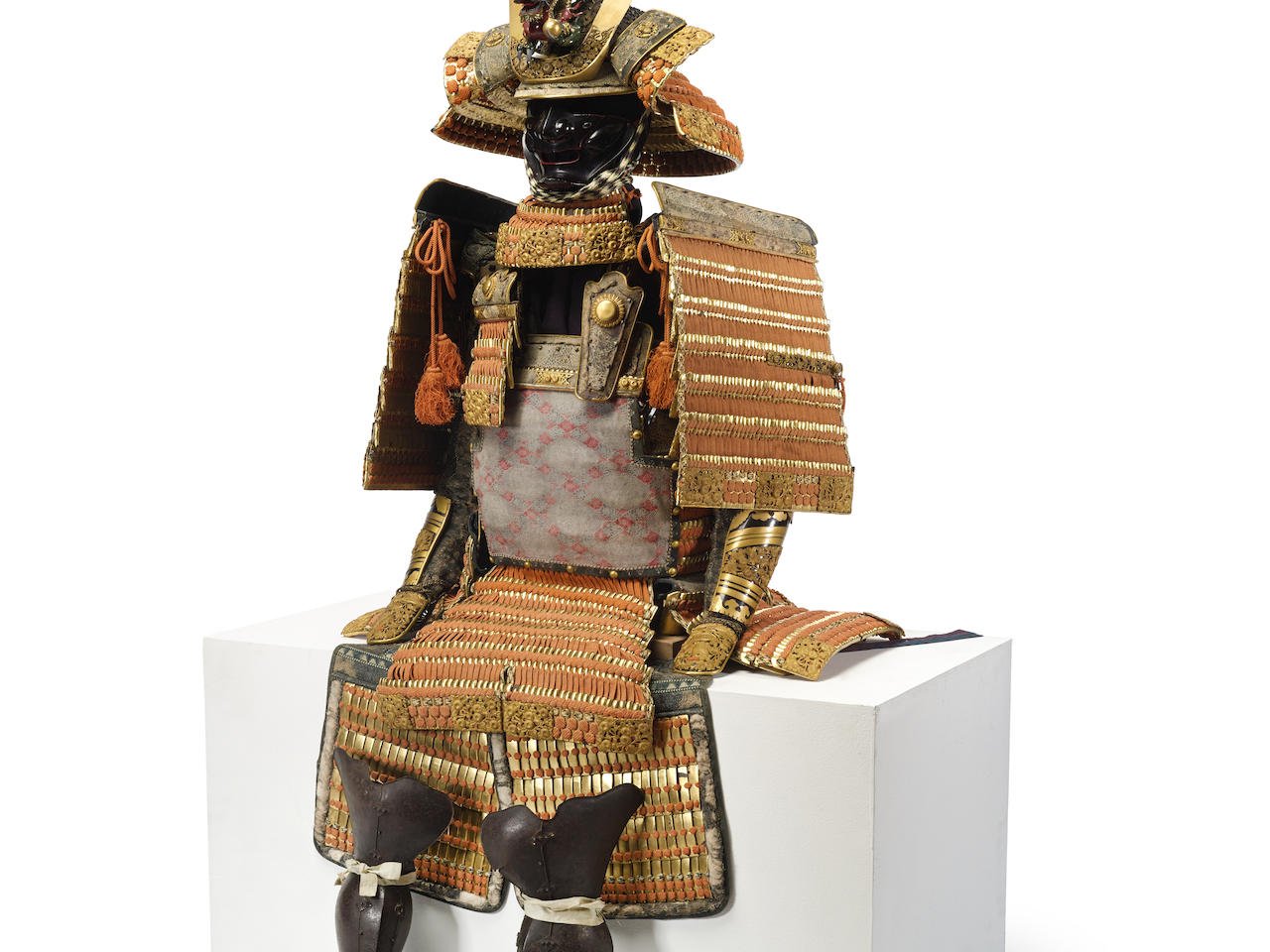
The components lacquered gold, laced in orange and mounted with gold kanamono pierce-carved with chrysanthemums, the armor comprising a koboshi kabuto dressed in nihojiro style with the front and rear cover plates pierced with chrysanthemums and the shinodare finished in nanakoji and standing rivets, the kuwagata-dai also pierce-carved with chrysanthemums and supporting large gilt-metal kuwagata and an impressive dragon maedate lacquered green, gold and red, the o-manju-jikoro ending in large fukigaeshi with stenciled leather, fusegumi, fukurin and chrysanthemum family crests; the black-lacquer nerikawa menpo with standing flanges on the cheeks and fitted with a three-lame yodarekake; the front of the hon-kozane do applied with stenciled leather with Chinese lions within diamond-shaped reserves, fitted with four sections of five-lame kusazari, each of the lowest lames separated into two sections; o-sode;kyubi-no-ita and sendan-no-ita decorated en suite to the do Yoshitsune gote with plates decorated in gold and black-lacquer and with elaborate gilt-copper covers on the forearm and tekko pierce carved with chrysanthemum and a butterfly over a stream with floating chrysanthemum heads; kawara haidate; russet-iron tsubo suneate; boar-bristle boots
With a fine lacquer yoroibitsu decorated with pine, plum and bamboo on a rocky slope and the heraldic crest of the Ii family all rendered in gold and silver takamaki-e, hiramaki-e, togidashi-nuri and embellishments of kirigane and okibirame on a glossy black-lacquer ground, the hardware gilt-copper carved with scrolling vines, lozenges and Ii family crests
With certificates of attestation written by Myochin Munemasa, the 26th master of the Myochin family (1716-1740) attributing the helmet bowl to Myochin Munemasa and the do and sode to Nobuie