Major-General Takimoto Hidemaro (1892-1962), Akita Prefecture
Viscount Yamaguchi Izumi no Kami Hirokuni (1808-1869), ninth head of the Yamaguchi clan and lord of Ushiku Castle, Hitachi Province
Yamaguchi Hirokuni was granted leadership of the Yamaguchi clan and stewardship of Ushiku castle from 1829 until 1839, along with the titles Izumi no Kami and Tajima no Kami. He inherited a fief in financial difficulty exacerbated by the Tenpo Daikikin (Great Famine) of 1833, which forced him to apply strict measures of austerity.
After retiring from office, he took the tonsure and lived as a monk until his death.
Takimoto Hidemaro was a Major-General in the Japanese Imperial Army.
Yamagami Hachiro was a scholar of Japanese history, famous for his extensive knowledge of Japanese armor. He wrote a number of authoritative books on the subject during the 1940s, including Nihon katchu-ko (A Study of Japanese Armor, 1942), and is best known in the West for Japan's Ancient Armor, published in English for the Japanese Government Railways Library in 1940.
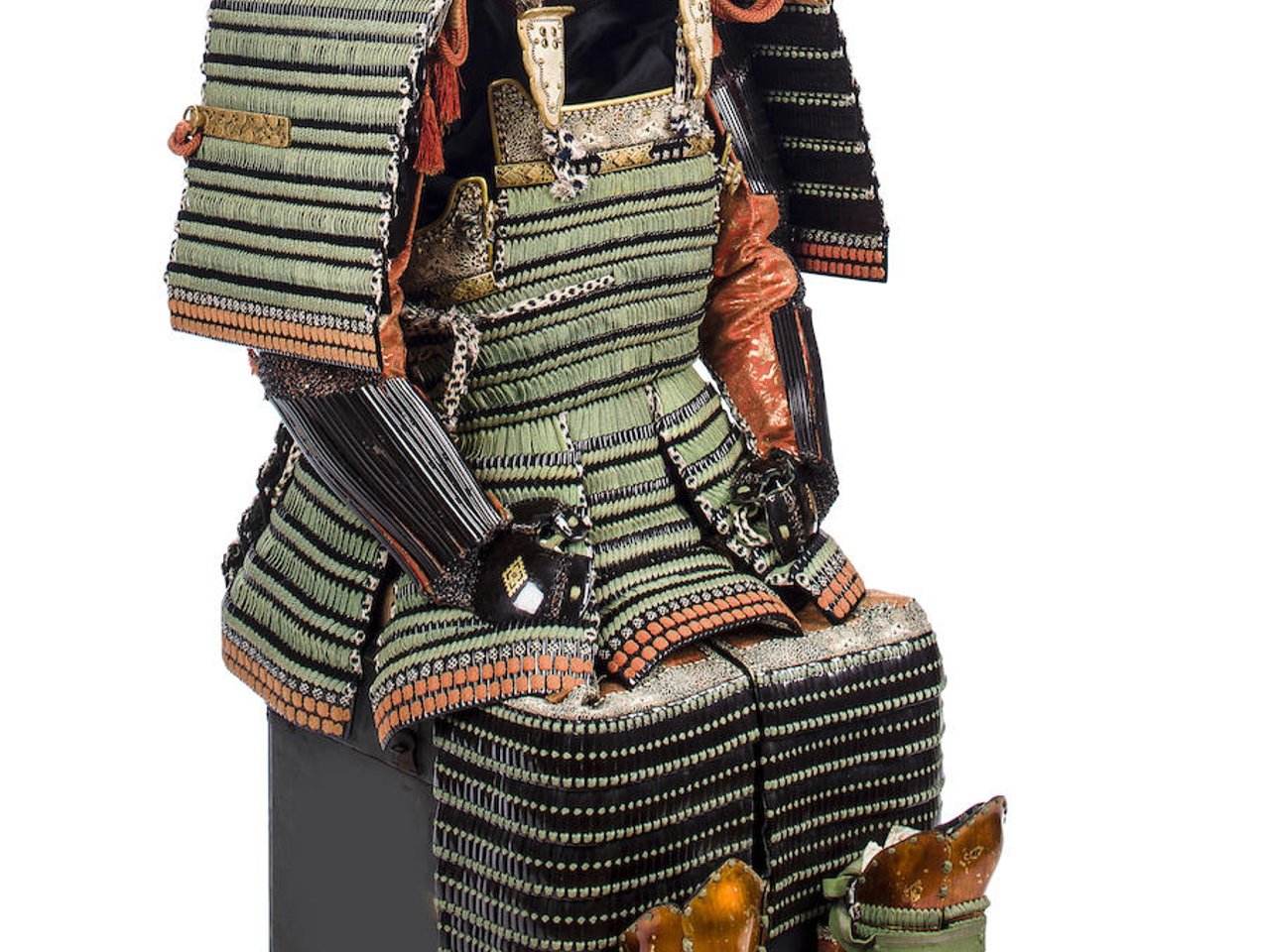
A hanging scroll written by former owner Takimoto Hidemaro accompanies this armor detailing the reputed provenance of the helmet. While on holiday near the Kawanakajima River, the site of many famous battles between Takeda Shingen (1521-1573) and Uesugi Kenshin (1530-1578), Takimoto, happened to meet an elderly dealer in antiques who showed him this helmet. After long negotiations, Takimoto was able to purchase the helmet and armor. Legend has it that the helmet was worn by Takeda Tenkyu (Shigeyasu), the younger brother of Shingen, who was killed at the battle of Kawanakajima in 1561. He was buried at Kakuso-ji temple (in modern-day Nagano Prefecture), now known as Tenkyu-ji after the name was changed in a ceremony to console the spirit of Shigeyasu. This helmet was reputedly in the collection of Tenkyu-ji temple.