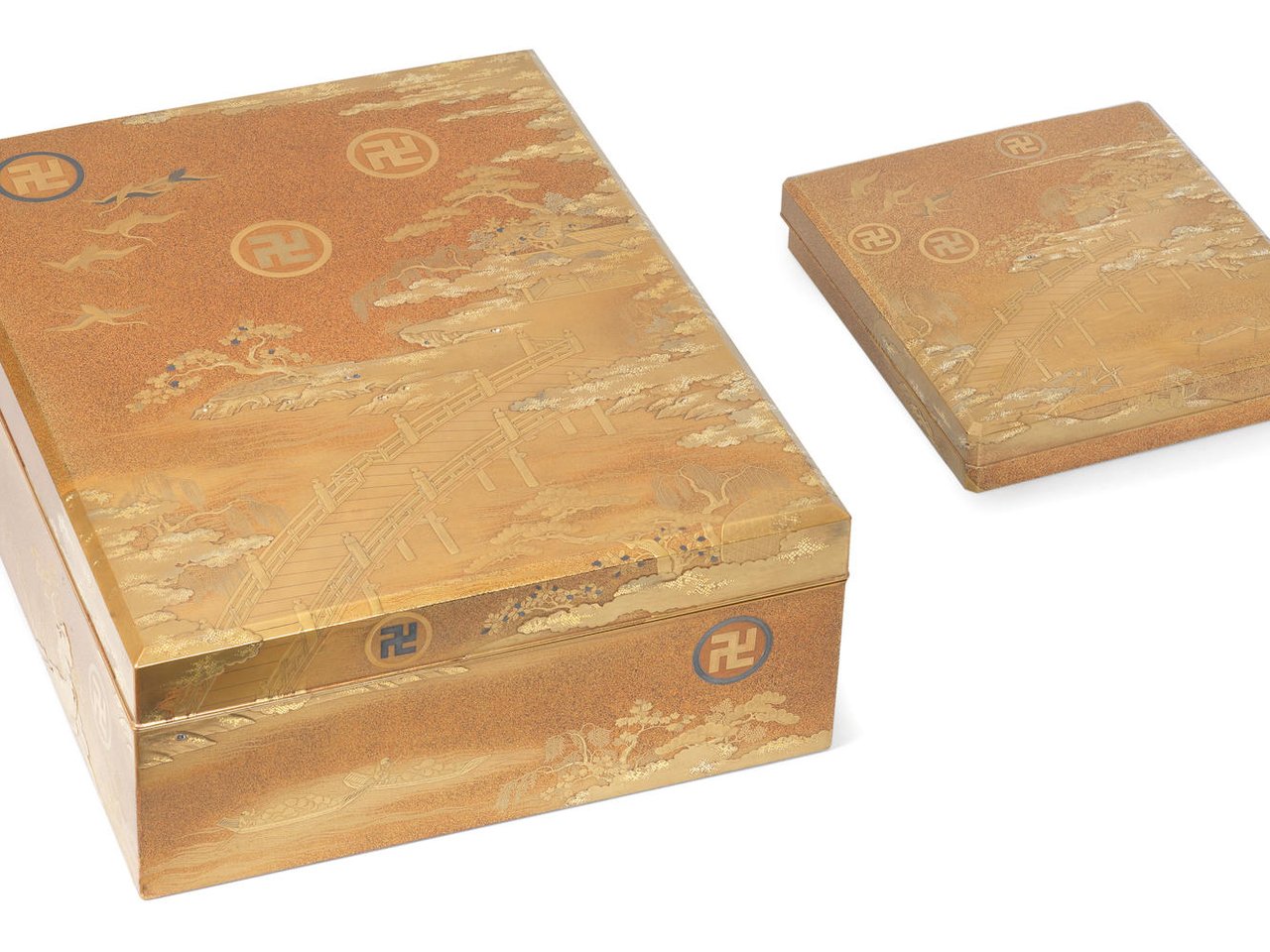
Both decorated predominantly in gold takamaki-e, e-nashiji and kirikane, the decoration as follows: on the bevelled-edged kabusebuta (overlapping cover) of the suzuribako: two oarsmen ferrying sheaves of rice on a boat approaching a bridge spanning a lake set with buildings beneath spreading pine and willow, a waterwheel in the lower foreground, three cranes in flight between three omote-manji (left-facing Buddhist swastika) crests, the design extending over the sides, the inside of the lid embellished with a pagoda and a Chinese building set on the rocky banks of a lake, a partially obscured full moon inlaid in silver emerging from peaks in the distance, all reserved on a dense nashiji ground, the interior of the box with a fitted removable tray and removable board containing the suzuri (ink-grinding stone) and gilt suiteki (water-dropper) in the form of a used inkstick; the exterior of the inrobuta (flush-fitting) lid of the ryoshibako similarly decorated with the oarsmen shown instead on the sides of the box, additional omote-manji crests scattered on all sides, the inside of the lid embellished in dense rich nashiji; with a wood storage box for the suzuribako.