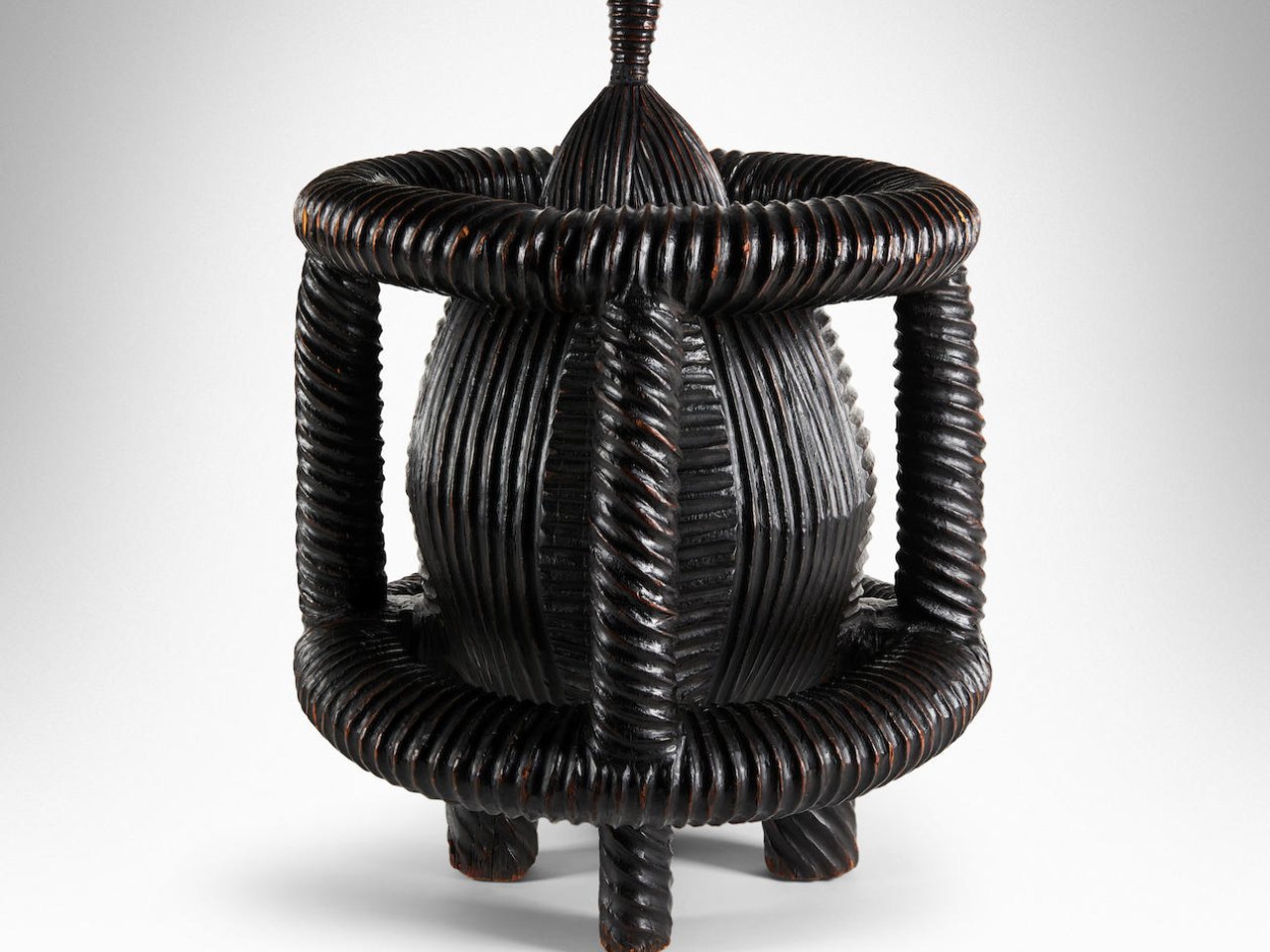
Petridis (Ibid.) comments that this vessel 'is a true feat of virtuosity on the part of its maker. Karel Nel (in Bassani et al, The Power of Form: African Art from the Horstmann Collection, Milan, 2002, p. 242) has written with regard to a vessel in the Horstmann Collection can also be applied to the [work] illustrated here: "the low relief patterns have an ease and fluency one would associate with the work of clay." Containers wrapped in an integrally carved surrounding structure [as in the present work] are extremely rare. Still, because the few known examples of this unusual type of vessel--the majority of which are preserved in public institutions in Europe and South African--are stylistically and technically so similar, it has been suggested that they may have been the work of a single workshop, if not artist (Sandra Klopper in Phillips, et. al, Africa: The Art of a Continent, London, Royal Academy of Arts, Munich/New York, Prestel, 1995, p. 223).'