Cast Signed Presentation Script for Shadow of a Doubt with a Signed Photograph of Joseph Cotton.
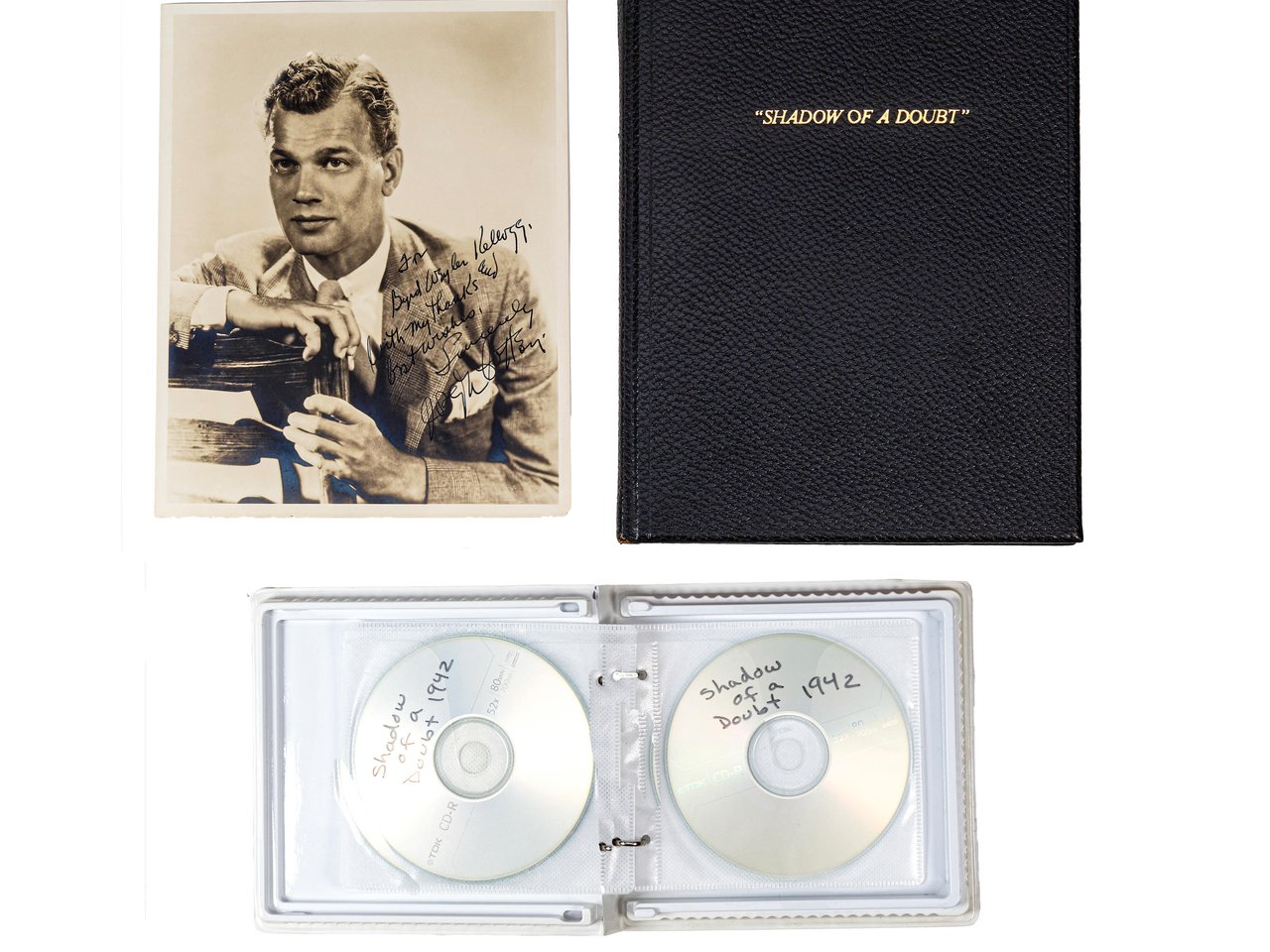
Universal, 1943. Vintage studio book-bound, 197-multi-color revision page Screenplay dated July 28, 1942 and written by Thornton Wilder with additional dialog by Sally Benson. The Alfred Hitchcock psychological thriller was a hit in its day and has come to be considered a masterpiece among the major works of the director. The textured black leather and board cover features the gold gilt imprint of the movie"s title. The interior front wrapper is signed by the movie"s major players including, director Alfred Hitchcock, the film"s two stars, Joseph Cotton and Teresa Wright, supporting players Macdonald Carey, Henry Travers, Patricia Collinge, Wallie Ford, Hume Cronyn, Edna May Wonacott, Charles Bates, Ruth Lee, Grandon Rhodes, Edwin Stanley, Francis Carson, producer Jack H. Skirball, and location manager Charles G. Dunwoody. The back wrapper is signed by crew including assistant director Billy Tummel, sound mixer Bob Pritchard, props Leigh Carson, hairdresser Florence Guernsey, makeup artist Bert Hadley, script clerk Adele Cannon, gaffer Warren Monroe, wardrobe Olive Koenitz, still camera Ed Estabrook, publicity Chas. Miles, scenic dept. Ron Beckham, secretary to Hitchcock Carol Stevens, asst. director Les Warner, boom Frank Artman, electric dept. Eddie Bobghan, script Virgil Simmons, grip Dean Paup, and electric dept. A. E. Shadur.
Tipped into the script pages intermittently are 12-vintage gelatin silver production photographs retaining their paper snipes on the versos. Pink revision pages dated August 10, 1942. Also included is a vintage, sepia photographic portrait of Joseph Cotton on double-weight paper signed and inscribed, "For Byrd Wyler Kellogg, With my thanks and best wishes. Sincerely, Joseph Cotton." Shadow of a Doubt is known to be Alfred Hitchcock"s personal favorite of all his films. Kellogg was a reporter who extensively covered the filming of Shadow of a Doubt in Santa Rosa for the Santa Rosa Press Democrat newspaper. Some have speculated that the sinister "Uncle Charlie" (Joseph Cotton) was an expression of the directors" well-documented dark side. Also includes photocopies of Kellogg"s resulting articles. The bound script and photos exhibit minor age, handling, and very light rubbing to covers.
9 x 11